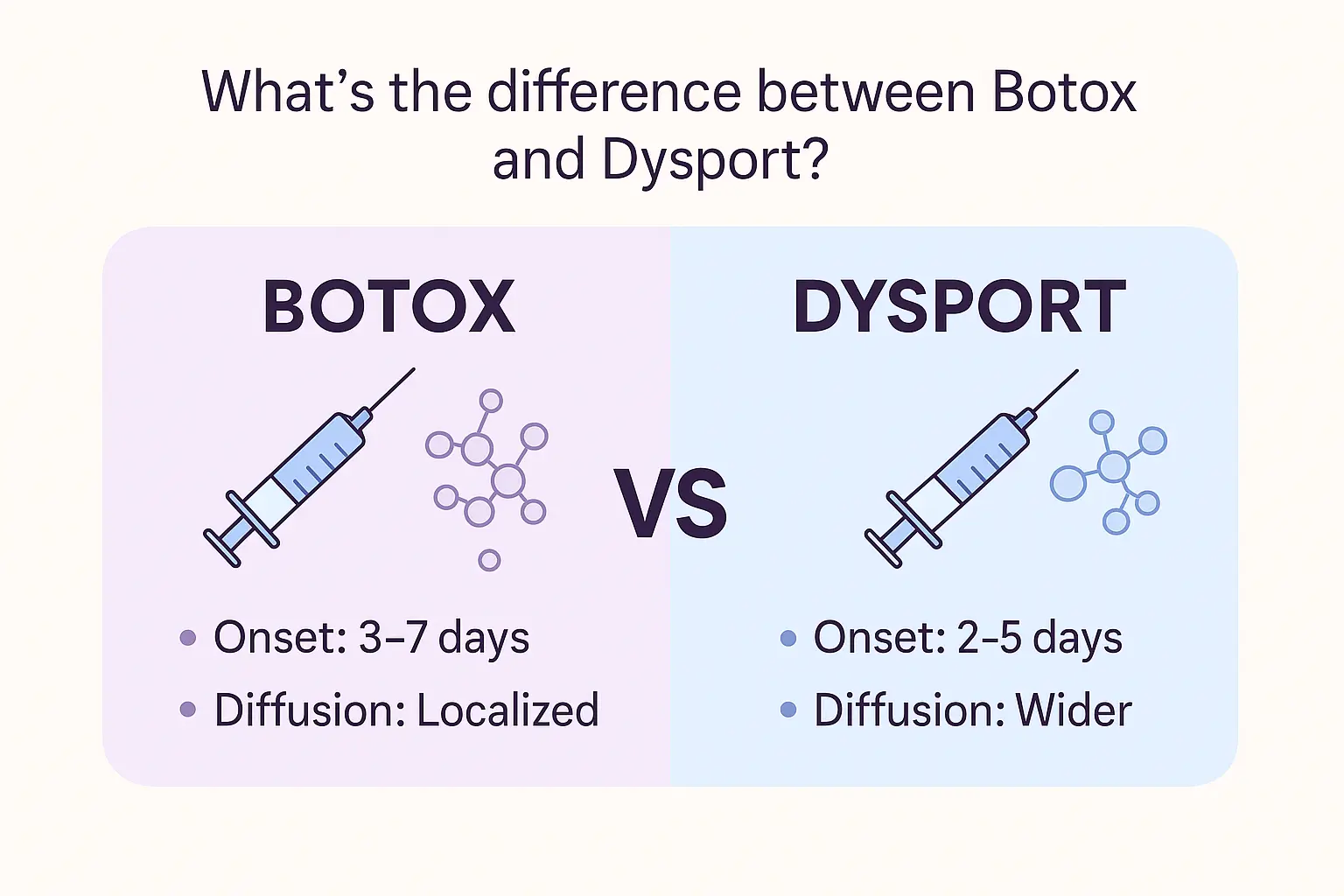
What’s the difference between Botox and Dysport?
Botox and Dysport are both popular neuromodulator treatments derived from botulinum toxin type A, but they have some key differences in formulation, onset of action, dosage, and areas of application. Here’s a breakdown of the differences:
1. Formulation:
– Botox: Contains onabotulinumtoxinA and is the original formulation approved by the FDA for cosmetic use.
– Dysport: Contains abobotulinumtoxinA, which has a slightly different molecular structure compared to Botox. This can affect how the product spreads in the tissues and how it interacts with muscle receptors.
2. Onset of Action:
– Botox: Typically takes effect within 3 to 7 days after injection.
– Dysport: May show results a bit faster, often within 2 to 5 days after treatment.
3. Diffusion and Spread:
– Botox: Generally stays more localized at the injection site, which can be advantageous for treating specific, targeted areas.
– Dysport: Tends to diffuse slightly further from the injection site. This can be beneficial for larger treatment areas but may require careful injection technique to avoid affecting unintended muscles.
4. Dosage:
– The units of measurement for Botox and Dysport are not equivalent. Typically, Dysport may require a higher number of units to achieve similar effects to Botox. For example, 1 unit of Botox is not the same as 1 unit of Dysport, making it important to consult with a qualified professional who understands the differences in dosing.
5. Duration of Results:
– Both treatments generally last about 3 to 6 months but individual results can vary. Some users report that Dysport may wear off slightly faster than Botox, though this can depend on various factors including individual metabolism and the area treated.
6. Areas of Use:
– Both Botox and Dysport are primarily used to treat wrinkles and fine lines in areas like the forehead, around the eyes (crow’s feet), and between the eyebrows (frown lines). However, practitioners may have preferences based on their experiences with each product.
7. Side Effects:
– Side effects for both Botox and Dysport are similar and can include bruising, swelling, headache, and, in rare cases, drooping eyelids or lowered brows. The likelihood of side effects can depend on the skill of the injector and the individual patient’s anatomical considerations.
Conclusion
While both Botox and Dysport serve similar purposes and have comparable effects, they differ in formulation, diffusion, onset time, and dosage. Choosing between Botox and Dysport will depend on individual preferences, anatomical considerations, and the recommendation of a qualified healthcare provider. If you’re considering either treatment, it’s essential to consult with a licensed professional to discuss which option best suits your needs and aesthetic goals.